


7. Problem Solving Series
Citizen-Centered Decision Making

7.1 Foundations of Critical Thinking
Strong decisions start with strong thinking. This module introduces leaders to the principles of critical thinking, showing how biases, assumptions, and group dynamics cloud judgment—and how to slow down reactive thinking to make clearer, more informed choices.
-
Pause before jumping to conclusions—challenging assumptions and recognizing bias before making decisions.
-
Test assumptions before acting, recognizing when personal or group biases are shaping decisions
Use critical thinking to strengthen individual and collaborative decision-making
-
What is critical thinking, and how does it differ from problem-solving and strategic thinking?
What barriers get in the way of clear thinking, and how do biases, assumptions, and group dynamics distort decisions?
How do I explain the way we jump to conclusions—and how can I slow it down?

7.2 Critical Inquiry & Structured Thinking
Clear thinking requires both curiosity and discipline. This module combines the power of inquiry—asking better questions and evaluating evidence—with practical frameworks to help structure thinking. Learn to move beyond surface reasoning, spot weak arguments, and apply structured methods to strengthen decision-making.
-
Ask better questions and apply a structured framework before deciding.
-
Use Socratic questioning to probe beneath surface-level reasoning
Evaluate the strength of data and arguments before making decisions
Apply structured decision making to your workplace challenges
-
How can I use inquiry and questioning techniques to probe deeper into reasoning?
How can I uncover hidden assumptions and test evidence without turning inquiry into adversarial debate?
What structured thinking models can I use to strengthen decisions?

7.3 What Kind of Problem is it?
Not all problems are created equal—and treating them as if they are can stall progress. In this module, learn to diagnose the type of challenge first, so you can choose responses that fit instead of forcing one-size-fits-all solutions.
-
Diagnose the problem type before choosing a solution.
-
Avoid misdiagnosing problems and applying ineffective solutions
Tailor strategies to fit the nature of the problem
-
How can I distinguish between different types of workplace challenges?
What problem-solving strategies are most effective for each type of challenge?
How can I avoid the common traps that come from misdiagnosing problems?

7.4 Collaborative Group Decision-Making
You can be the sharpest thinker in the room, but if you can’t bring others along, your ideas won’t go far. This module shows how to move beyond the “marathon effect” (where leaders run ahead and leave others behind) and counter the bias of believing our ideas are best. Leaders learn practical tools to draw in diverse perspectives, spark creativity, and build commitment—so decisions aren’t just smarter, but also more likely to stick.
-
Facilitate group decisions by balancing diverse perspectives with structured alignment.
-
Use collaborative approaches to improve group decision making
Build shared ownership and buy-in of decisions by engaging diverse perspectives in the process.
-
Why do decisions and outcomes improve when more voices are at the table?
How can I facilitate a process that moves groups from many ideas to a shared decision?
What is the “groan zone,” and how can I help a group move through it?

7.5 Seeing the System
To lead in complexity, we need to see beyond surface symptoms and uncover the forces shaping them. This module introduces systems thinking as a lens to understand interconnected challenges and explores how limited perspectives, roles, and mental models create blind spots. By shifting to a fuller view, leaders can recognize patterns, anticipate consequences, and design more sustainable solutions.
-
Step back to see the interconnected, broader context before jumping into solutions.
-
Challenge personal and team mental models to open new pathways for problem-solving
Recognize when a problem is part of a larger interconnected system
Shift from symptom-solving to seeing underlying patterns
-
In what ways do limited perspectives and mental models obscure the full system picture?
What is systems thinking, and how does it help me navigate complex, interconnected organizational challenges?
What changes when I shift from seeing only fragments of a system to recognizing the whole?
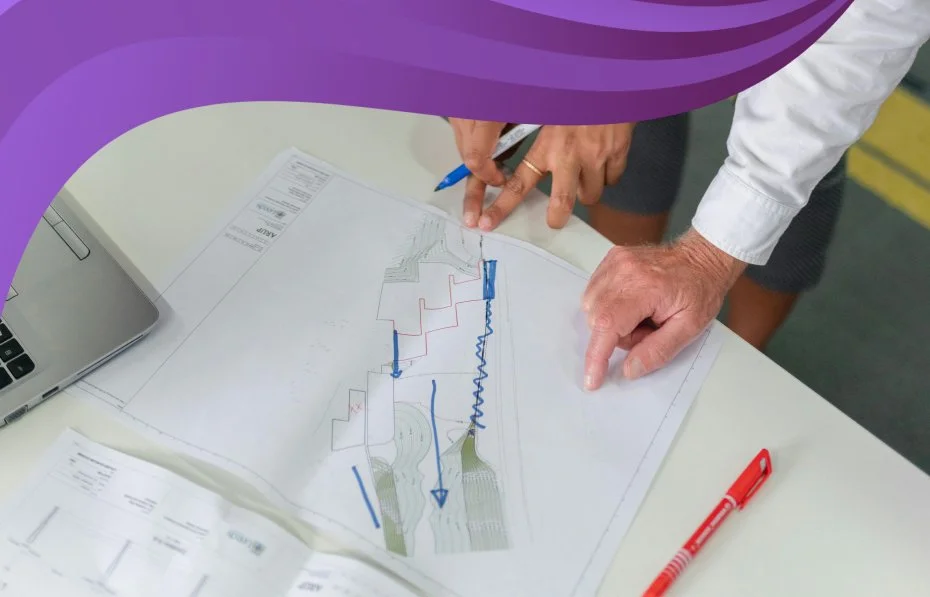
7.6 Mapping the System
Complex systems can feel invisible or overwhelming until we begin to map them. In this hands-on lab, participants use system mapping tools to make relationships, patterns, and hidden dynamics visible. By bringing the system into view, leaders develop a deeper understanding of how different parts interact and gain a clearer view of where to intervene for meaningful, lasting impact.
-
Make the invisible visible using mapping to see system patterns, relationships, and structures beyond the surface.
-
Use systems mapping tools to understand relationships and feedback loops
Engage teams in mapping to build shared understanding of complex problems
-
What tools can I use to map and explore the systems around me?
How can I apply those tools to analyze, explore, and address complex, interconnected challenges in my team or organization?
How can system mapping guide smarter strategies for tackling complex challenges?

7.7 Creating Leverage for Change
Small shifts in the right place can transform entire systems. Building on the system maps created in Mapping the System, this lab focuses on identifying high-impact leverage points, designing safe-to-fail experiments, and tackling the deeper patterns that sustain current outcomes. Participants learn to move beyond surface fixes, test change ideas at small scale, and weigh risks and benefits before scaling what works.
-
Test smart, targeted changes that create outsized impact.
-
Pinpoint leverage points in systems using mapping tools
Design safe-to-fail experiments that encourage innovation and minimize risk
Address the deeper patterns sustaining challenges instead of just treating symptoms
Evaluate experiment results to inform larger-scale change initiatives
-
How can I identify and use leverage points to evoke change?
What are safe-to-fail experiments and how can they support system change?
What approaches mitigate the risks of safe-to-fail experiments?

7.9 Circular Thinking: Building Systems that Last
Our current linear “take–make–waste” systems are depleting the planet’s natural resources faster than they can be renewed. Participants will be challenged to rethink consumption and production through the lens of circular thinking and regenerative leadership practices. Participants will explore the cause-and-effect of hyper-consumerism and leave with practical steps to minimize impact in both personal and organizational contexts.
-
Lead with stewardship—making decisions that regenerate resources instead of depleting them.
-
Shift thinking from linear consumption to circular and regenerative practices
Identify opportunities to reduce waste and energy use in daily operations
Role-model responsible consumption practices that influence others
Embed stewardship into team or organizational decisions and policies
-
How do today’s linear processes and hyper-consumer habits deplete natural resources and threaten future generations?
What can regenerative and circular processes teach us about leading more responsibly?
What everyday choices and consumption practices can I adopt to reduce my environmental impact at work and at home?
How can I influence my team and organization to lead with stewardship and embed sustainability into our practices?